What is the Internet of Things (IoT)?
Discover the Internet of Things (IoT), a network of interconnected devices revolutionizing daily life. Explore how IoT works, its applications in smart homes and industries, benefits, challenges, and future trends for a connected world.
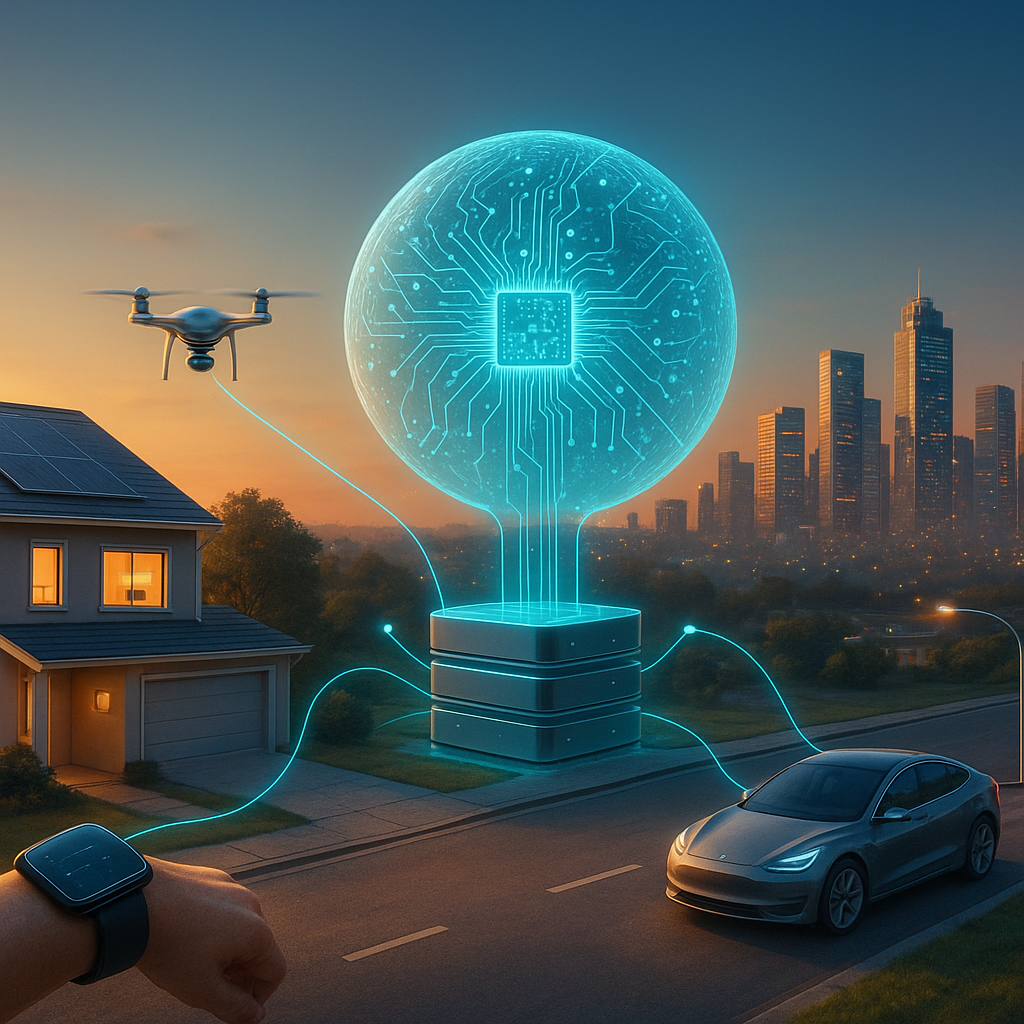
The Internet of Things (IoT) refers to the vast network of physical devices embedded with sensors, software, and connectivity to exchange data over the internet. From smart thermostats in homes to industrial machines in factories, IoT enables everyday objects to collect and share information, making our world more efficient and responsive. This technology is transforming industries and lifestyles by creating seamless connections between the digital and physical realms.
History and Evolution of IoT
The concept of IoT originated in the 1980s with early experiments like the connected vending machine at Carnegie Mellon University. It gained momentum in the 1990s through Kevin Ashton, who coined the term while working on RFID technology at Procter & Gamble. The widespread adoption of smartphones, high-speed internet, and affordable sensors in the 2010s propelled IoT into mainstream use, with billions of devices now connected globally.
How IoT Works
IoT systems operate through a layered architecture involving devices, networks, and cloud platforms. Sensors on IoT devices detect environmental changes, such as temperature or motion, and send data via Wi-Fi, Bluetooth, or cellular networks to central servers. Cloud computing processes this data using AI and machine learning to generate insights or automate actions, like adjusting a home's lighting based on occupancy.
Sensors and Actuators: Gather data and perform actions, e.g., a fitness tracker's heart rate monitor.
Connectivity Protocols: Enable communication, such as MQTT for low-bandwidth efficiency.
Edge Computing: Processes data locally to reduce latency, ideal for real-time applications.
Key Applications of IoT
IoT finds applications across diverse sectors, enhancing efficiency and innovation. In smart homes, devices like Nest thermostats learn user preferences to optimize energy use. Healthcare benefits from wearable monitors that track vital signs and alert doctors proactively.
Industrial IoT (IIoT): Factories use sensors for predictive maintenance, as seen in General Electric's jet engine monitoring, reducing downtime by up to 20%.
Smart Cities: Traffic lights in Singapore adjust in real-time to ease congestion.
Agriculture: Soil sensors in California's farms optimize irrigation, conserving water by 30%.
Benefits and Challenges of IoT
The primary benefits of IoT include improved efficiency, cost savings, and data-driven decisions. For instance, logistics companies like UPS use IoT trackers to optimize routes, saving millions in fuel annually. However, challenges persist, such as cybersecurity risks—hackers can exploit weak device security—and privacy concerns from constant data collection.
Scalability Issues: Managing billions of devices strains networks.
Interoperability: Devices from different manufacturers often don't communicate seamlessly.
Energy Consumption: Powering remote sensors remains a hurdle.
Future of IoT
Looking ahead, IoT will integrate with 5G and AI for faster, smarter systems. Projections estimate over 75 billion connected devices by 2025, driving advancements in autonomous vehicles and personalized medicine. As standards evolve, addressing security and ethics will be crucial for sustainable growth.