What is Artificial Intelligence? Definition & Examples
Discover what artificial intelligence (AI) really means. Explore its history, types, how it works, real-world applications, and future trends in this comprehensive guide for beginners.
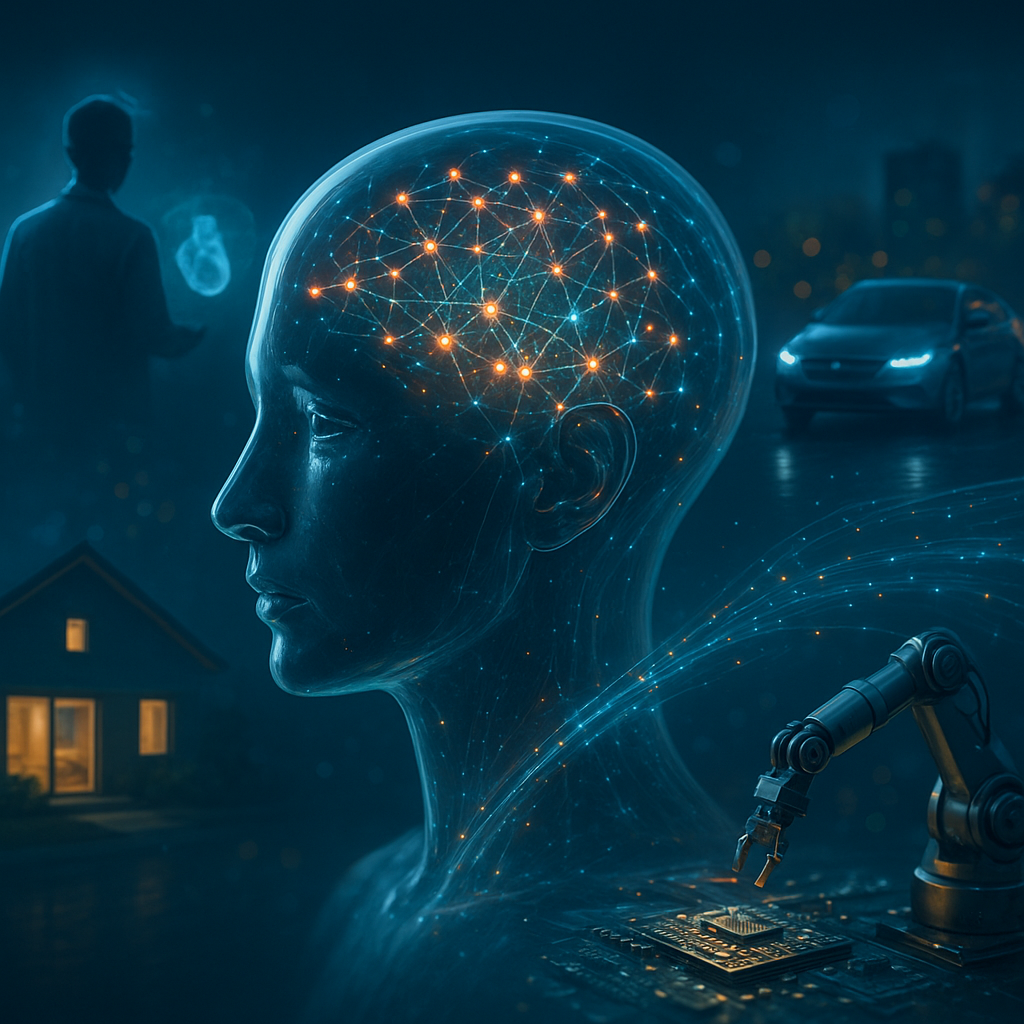
Artificial intelligence (AI) refers to the simulation of human intelligence in machines programmed to think and learn like humans. It enables computers to perform tasks that typically require human cognition, such as visual perception, speech recognition, and decision-making. From virtual assistants to self-driving cars, AI is transforming industries worldwide.
History of Artificial Intelligence
The concept of AI dates back to ancient myths, but modern AI began in the 1950s. Alan Turing proposed the idea of machines thinking in his 1950 paper Computing Machinery and Intelligence. The term artificial intelligence was coined at the Dartmouth Conference in 1956, marking the field's birth. Early AI focused on symbolic logic, evolving into today's data-driven approaches.
Types of Artificial Intelligence
AI is categorized by capability and functionality. Narrow AI (or weak AI) handles specific tasks, while general AI aims for human-like versatility. Superintelligent AI surpasses human intelligence across all domains.
Narrow AI: Powers tools like Siri for voice commands or chess-playing programs like Deep Blue.
General AI: Theoretical; no true examples yet, but systems like GPT models approximate it.
Reactive AI: Simple systems like IBM's Deep Blue that react to inputs without memory.
How Artificial Intelligence Works
Machine learning (ML) is a core subset of AI where algorithms learn from data without explicit programming. Neural networks, inspired by the human brain, process information through interconnected nodes. Deep learning, using multi-layered networks, excels in image and speech recognition by analyzing vast datasets.
Collect and preprocess data.
Train models on labeled examples.
Evaluate and refine for accuracy.
Deploy for real-world predictions.
Real-World Applications of AI
AI powers everyday technologies and solves complex problems. In healthcare, it aids diagnostics; in finance, it detects fraud. Autonomous vehicles use AI for navigation, reducing accidents.
Healthcare: AI algorithms like those in IBM Watson analyze medical images for cancer detection.
Entertainment: Netflix's recommendation engine uses AI to suggest personalized content.
Transportation: Tesla's Autopilot relies on AI for self-driving features.
Customer Service: Chatbots like those from Google handle queries 24/7.
Challenges and Future of Artificial Intelligence
AI faces issues like bias in data, job displacement, and ethical concerns over privacy. Regulations like the EU AI Act aim to address these. The future promises advancements in generative AI, quantum computing integration, and ethical frameworks for responsible development.
In conclusion, artificial intelligence is revolutionizing how we live and work. As it evolves, staying informed about its benefits and risks will be key. Embrace AI's potential while advocating for ethical use.