Who Was Mustafa Kemal Atatürk?
Discover the life of Mustafa Kemal Atatürk, founder of modern Turkey. From military hero at Gallipoli to reformer who secularized the nation, explore his legacy in Turkish history, reforms, and enduring impact on the republic.
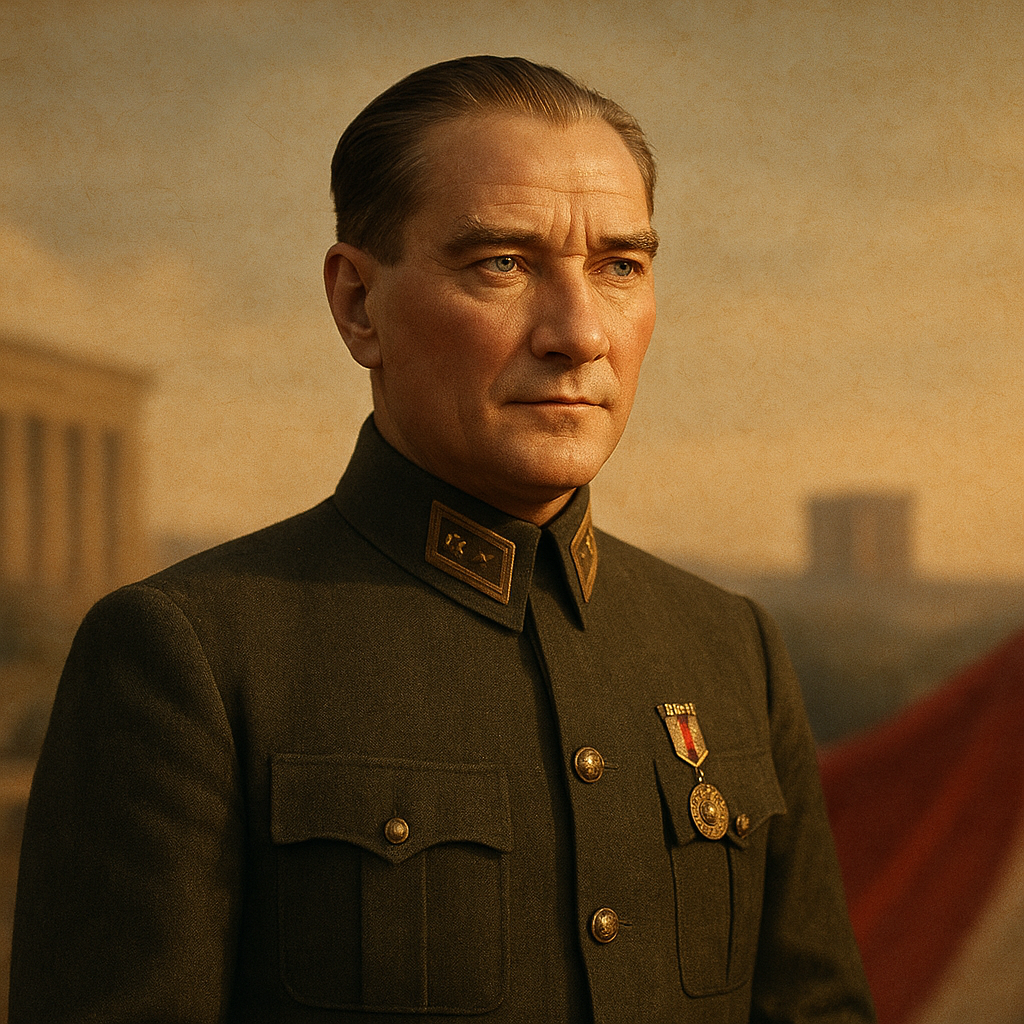
Mustafa Kemal Atatürk (1881–1938) was a visionary military leader, statesman, and revolutionary who founded the Republic of Turkey and served as its first president. Revered as the Father of the Turks (Atatürk), he transformed the Ottoman Empire's remnants into a modern, secular nation-state through bold reforms. His legacy shapes Turkey's identity to this day.
Early Life and Military Education
Born on May 19, 1881, in Salonika (now Thessaloniki, Greece), then part of the Ottoman Empire, Mustafa Kemal grew up in a middle-class family. His father, Ali Rıza, was a customs officer, and his mother, Zübeyde, instilled strong values. He attended military schools, excelling in mathematics and history, and adopted the name 'Kemal' for his academic prowess.
Graduating from the Ottoman Military Academy in 1902 and the War College in 1905, he became a captain. Early postings exposed him to nationalist ideas amid the empire's decline. His sharp intellect and discipline marked him as a rising star in the army.
Hero of Gallipoli and World War I
Atatürk first gained fame during the Gallipoli Campaign in 1915, part of World War I. As a colonel, he defended the Dardanelles against Allied forces, including ANZAC troops. His tactical brilliance at Anafartalar and Conkbayırı halted the invasion, saving Istanbul.
Anafartalar Victory: Atatürk's counterattacks repelled British and Australian forces, inflicting heavy casualties.
Conkbayırı Defense: He personally led charges, famously declaring, 'I am not ordering you to attack; I am ordering you to die.'
Chunuk Bair Stand: His leadership prevented a breakthrough, earning Ottoman Germany's highest honor.
These successes boosted his reputation, though the Ottoman defeat in 1918 left the empire partitioned by Allied powers under the Treaty of Sèvres.
Turkish War of Independence and Republic Founding
In 1919, Atatürk landed in Samsun, igniting the Turkish War of Independence. He organized the Grand National Assembly in Ankara, rejecting the sultan's puppet government. Victories at Sakarya (1921) and Dumlupınar (1922) expelled Greek, British, French, and Armenian forces.
1919: Amasya Circular calls for national resistance.
1920: Ankara Assembly declares sovereignty.
1923: Treaty of Lausanne secures modern borders; Republic proclaimed on October 29.
As president from 1923 to 1938, he abolished the sultanate (1922) and caliphate (1924), establishing a republic.
Revolutionary Reforms and Modernization
Atatürk's Kemalism—six principles of republicanism, nationalism, populism, statism, secularism, and revolutionism—guided Turkey's transformation. He introduced a secular constitution, granting women voting rights in 1934, ahead of many Western nations.
Alphabet Reform (1928): Switched to Latin script, boosting literacy from 10% to near 90% in decades.
Legal Codes: Adopted Swiss civil, Italian penal, and German commercial laws, ending Sharia.
Dress and Calendar: Encouraged Western attire, Gregorian calendar, and metric system.
Education Push: Closed religious schools, opened state universities like Istanbul Technical.
These changes industrialized Turkey, built infrastructure like Ankara as capital, and fostered national unity.
Legacy and Lasting Impact
Atatürk died on November 10, 1938, from cirrhosis, aged 57. His mausoleum, Anıtkabir, in Ankara, draws millions. Turkey's 1982 constitution mandates his principles; his face adorns currency and public spaces.
Examples of influence include annual Youth and Sports Day (May 19) and commemorations at Çanakkale. Globally, he's studied for nation-building, though debates persist on secularism's role today. Atatürk's vision endures as Turkey's foundational blueprint.