Who Was Fatih Sultan Mehmet, Conqueror of Constantinople?
Discover the life of Fatih Sultan Mehmet, the Ottoman Sultan who conquered Constantinople in 1453, ending the Byzantine Empire. Explore his early life, military triumphs, cultural patronage, and enduring legacy as a transformative leader.
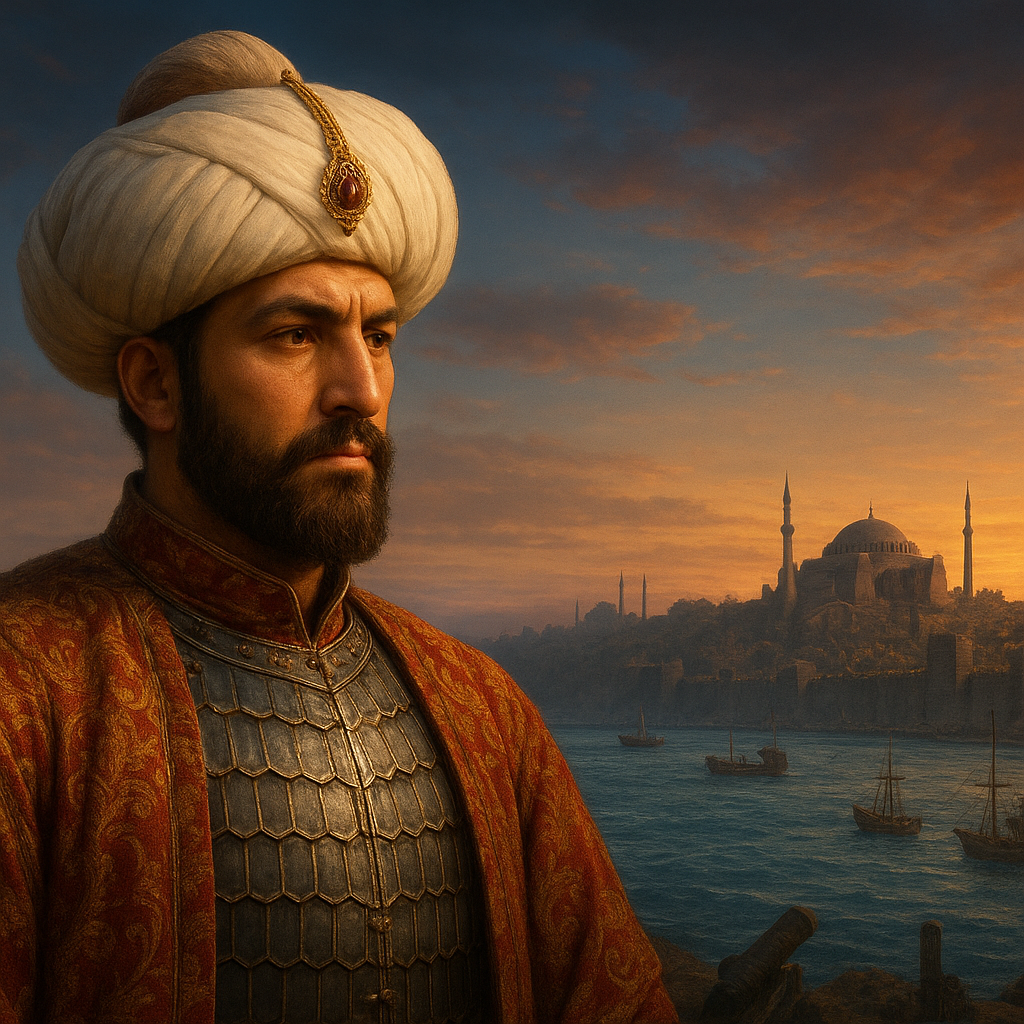
Fatih Sultan Mehmet, also known as Mehmed II or Mehmed the Conqueror, was the seventh Ottoman Sultan who ruled from 1444 to 1446 and then from 1451 until his death in 1481. Renowned for capturing Constantinople in 1453 at the age of 21, he transformed the city into Istanbul, the new capital of the Ottoman Empire. His reign marked the end of the Byzantine Empire and the rise of Ottoman dominance in Europe and the Middle East.
Early Life and Ascension to Power
Born on March 30, 1432, in Edirne, Fatih Sultan Mehmet was the son of Sultan Murad II. From a young age, he received a comprehensive education in sciences, languages, and military strategy, fluent in Turkish, Arabic, Greek, Latin, and Persian. He first ascended the throne at age 12 in 1444 after his father's abdication, but his initial reign was short-lived due to the Battle of Varna crisis, leading Murad II to return.
Upon Murad's death in 1451, Mehmet reclaimed the throne at 19. Determined to fulfill a long-held Ottoman ambition, he immediately began preparations to conquer Constantinople, the heavily fortified Christian stronghold that stood as a barrier between Europe and Asia.
The Historic Conquest of Constantinople
The siege of Constantinople began on April 6, 1453, with Mehmet commanding an army of over 80,000 troops against the city's 7,000 defenders led by Emperor Constantine XI. Innovative tactics included massive cannons designed by Hungarian engineer Orban, capable of firing 600-pound stones. After 53 days, on May 29, 1453, Ottoman forces breached the walls using a massive wooden ramp and ship-dragging maneuvers across land.
Massive Bombardment: Orban's super cannon fired relentlessly, weakening the Theodosian Walls.
Naval Innovation: Mehmet ordered ships pulled overland from the Bosphorus to bypass the harbor chain.
Final Assault: Elite Janissary corps stormed the gates, leading to the city's fall.
Reign, Reforms, and Cultural Patronage
Renamed Istanbul, the former Constantinople became a thriving multicultural hub under Mehmet's rule. He rebuilt the city with mosques, markets, and palaces, including the iconic Topkapi Palace. As a patron of arts and sciences, he commissioned works from Italian painters like Gentile Bellini and collected ancient manuscripts, earning the moniker 'The Father of Conquest' or Fatih.
Mehmet expanded the empire through campaigns in the Balkans, Anatolia, and the Black Sea, annexing Serbia, Bosnia, and Trebizond. He implemented administrative reforms, centralizing power with a millet system for religious communities and codifying laws blending Islamic sharia with secular kanun.
Architectural Legacy: Construction of the Fatih Mosque complex.
Artistic Flourish: Portraits depicting him in European Renaissance style.
Educational Institutions: Establishment of medreses promoting scholarship.
Legacy and Death
Mehmet II's conquest shifted global power dynamics, facilitating Ottoman expansion for centuries. His vision bridged Eastern and Western worlds, influencing the Renaissance through preserved Greek texts. He died on May 3, 1481, at 49, likely from poison or illness during a campaign against Persia, succeeded by his son Bayezid II.
Fatih Sultan Mehmet remains a symbol of strategic brilliance and cultural renaissance, celebrated in Turkish history as a pivotal figure who reshaped empires.