Who Was Fatih Sultan Mehmet the Conqueror?
Discover the life of Fatih Sultan Mehmet, the Ottoman sultan who conquered Constantinople in 1453. Learn about his early life, military campaigns, reforms, and enduring legacy as a visionary leader and patron of the arts.
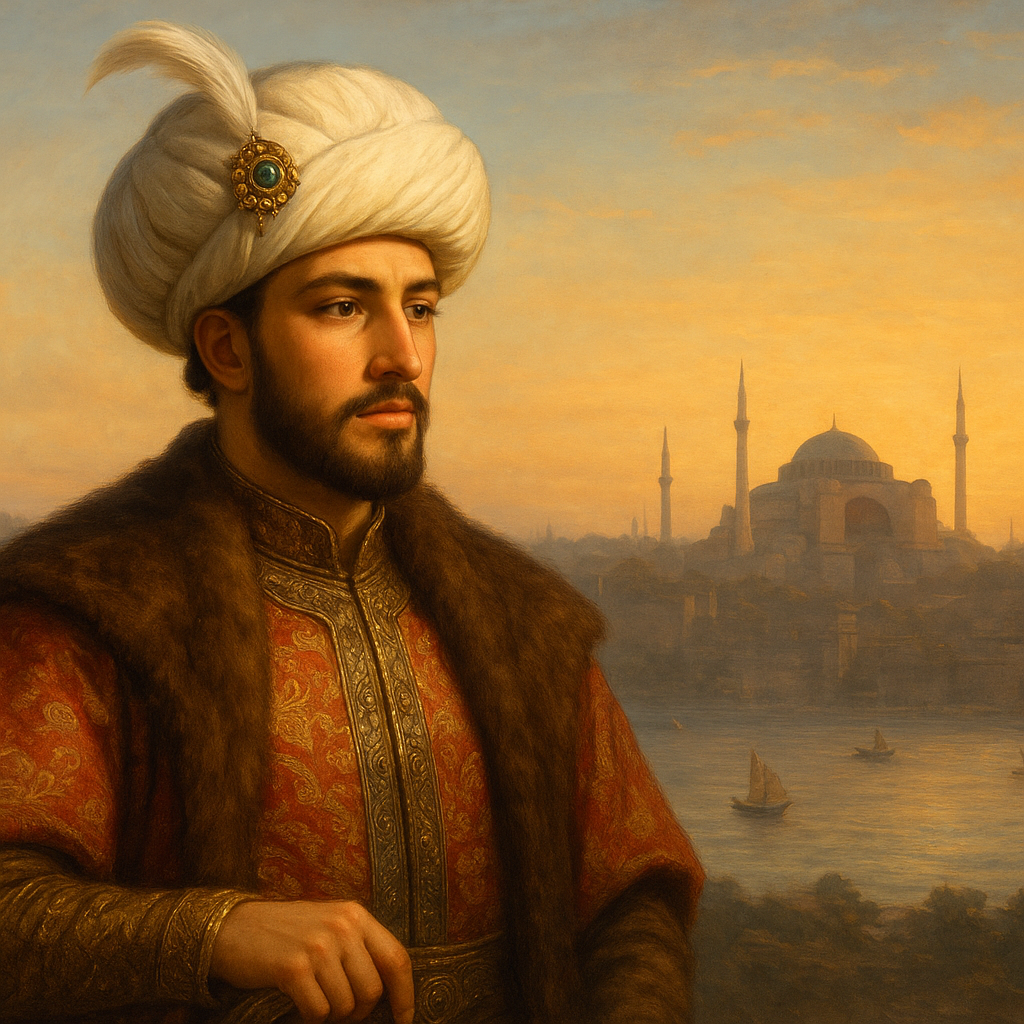
Fatih Sultan Mehmet, also known as Mehmed the Conqueror or Mehmed II, was the seventh sultan of the Ottoman Empire who transformed it into a global power. Ruling primarily from 1451 to 1481, he is most famous for capturing Constantinople in 1453 at the age of 21, ending the Byzantine Empire. His reign marked a pivotal shift from medieval to early modern history, blending military prowess with cultural patronage.
Early Life and Ascension to Power
Born on March 30, 1432, in Edirne, Fatih Sultan Mehmet was the son of Sultan Murad II. From a young age, he received a rigorous education in warfare, languages, and governance, studying Greek, Latin, Persian, and Arabic. He briefly ruled as sultan from 1444 to 1446 during his father's retirement but faced a rebellion that forced his abdication. Upon Murad II's death in 1451, Mehmet ascended the throne at 19, determined to fulfill a long-held Ottoman dream: conquering Constantinople.
The Historic Conquest of Constantinople
The siege of Constantinople in 1453 stands as Mehmet's greatest achievement. Leading an army of over 80,000 troops, he besieged the city for 53 days using innovative tactics like massive cannons designed by Hungarian engineer Orban. On May 29, 1453, Ottoman forces breached the walls, and Emperor Constantine XI died in battle. Renaming it Istanbul, Mehmet made it the Ottoman capital, symbolizing the empire's rise.
Massive Bombardment: The largest cannons ever built shattered the Theodosian Walls.
Naval Blockade: Mehmet constructed a portage to drag ships overland into the Golden Horn.
Final Assault: Elite Janissary troops overwhelmed the defenders at dawn.
Reforms and Cultural Patronage
Beyond conquest, Mehmet implemented sweeping reforms. He centralized administration, reformed taxation, and promoted religious tolerance, allowing Christians and Jews to practice freely under the millet system. A visionary patron, he supported scholars like Ali Qushji in astronomy and built grand structures including the Fatih Mosque complex. His court attracted Italian artists like Gentile Bellini, bridging Renaissance Europe and the Islamic world.
Fatih Mosque: A masterpiece of Ottoman architecture in Istanbul, completed in 1470.
Topkapi Palace: Expanded as the imperial residence, housing treasures still viewed today.
Legal Code: Kanunname laws standardized governance across the empire.
Military Campaigns and Later Reign
Mehmet expanded the empire aggressively, conquering Serbia, Bosnia, and parts of Anatolia and the Black Sea coast. Key victories included the 1461 capture of Trebizond and naval dominance against Venice. However, failures like the 1480 siege of Rhodes tempered his ambitions. He died on May 3, 1481, at 49, possibly poisoned, leaving a vast realm to his son Bayezid II.
Legacy of Fatih Sultan Mehmet
Fatih Sultan Mehmet's legacy endures as the architect of the Ottoman golden age. His conquest ended 1,100 years of Byzantine rule, ushering Islam into Europe and fostering a multicultural empire. Revered as 'Fatih' (Conqueror) by Muslims and studied worldwide, his blend of warrior spirit and intellectual curiosity inspires leaders today. Modern Istanbul reflects his vision, from its skyline to its diverse heritage.