What is the Nile River? Length, History & Facts
Discover the Nile River, the world's longest river at 6,650 km, flowing through 11 African countries. Learn its geography, ancient Egyptian significance, ecology, dams, and modern challenges in this comprehensive guide.
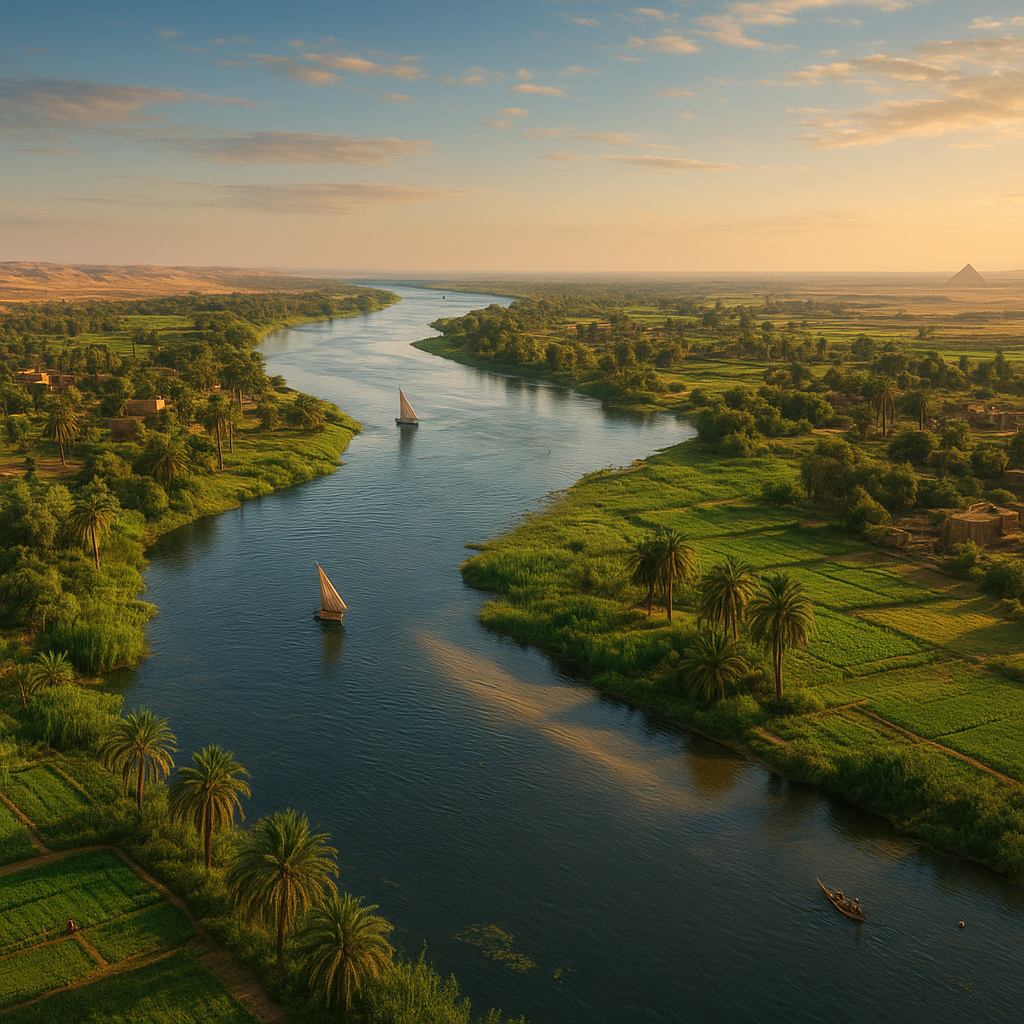
The Nile River is the longest river in the world, stretching over 6,650 kilometers (4,130 miles) from East Africa to the Mediterranean Sea. Flowing northward through 11 countries, primarily Egypt and Sudan, it has been a lifeline for civilizations for millennia, providing water for agriculture, transportation, and daily life. Its vital role in shaping human history makes it one of the most iconic geographical features on Earth.
Geography and Course of the Nile River
The Nile River originates from two main tributaries: the White Nile, which starts at Lake Victoria in Uganda and Tanzania, and the Blue Nile, rising in the Ethiopian Highlands. These branches converge at Khartoum in Sudan, forming the main Nile that flows through the vast Sahara Desert into Egypt. The river ends at the Nile Delta, a fertile fan-shaped region where it empties into the Mediterranean Sea near Alexandria.
White Nile: Longer but less voluminous, it provides consistent flow year-round.
Blue Nile: Carries most of the river's water, especially during Ethiopia's rainy season floods.
Nile Delta: Covers 22,000 square kilometers, supporting Egypt's agriculture.
Historical Significance of the Nile
Ancient Egyptians revered the Nile River as a god, calling it Hapi, believing its annual floods brought fertile silt for farming. This predictable inundation enabled one of the world's earliest civilizations, with pharaohs building pyramids and temples along its banks. The river facilitated trade, connecting Nubia in the south to the Mediterranean world.
Pyramids of Giza: Constructed near the Nile for easy stone transport.
Cleopatra's Needle: Obelisks originally from the Nile Valley, now in London and New York.
Nile Cruises: Echo ancient voyages, popular for tourists today.
Ecology and Wildlife Along the Nile
The Nile River supports diverse ecosystems, from papyrus swamps in the south to desert oases in Egypt. It hosts species like the Nile crocodile, hippopotamus, and migratory birds. However, its biodiversity faces threats from habitat loss and invasive species such as water hyacinth.
Modern Importance and Challenges
Today, the Nile River irrigates 85% of Egypt's arable land, sustaining over 100 million people. Major infrastructure includes the Aswan High Dam, built in 1970, which controls floods but has caused soil salinity issues. Disputes over water sharing, like the Grand Ethiopian Renaissance Dam, highlight ongoing tensions among Nile Basin countries.
Aswan Dam: Generates hydroelectric power for Egypt.
Nile Basin Initiative: Cooperative framework for 10 countries to manage resources.
Climate Change Impact: Reduced flows due to droughts in upstream regions.
Conclusion: The Lifeline of Africa
The Nile River remains a symbol of resilience and prosperity, bridging ancient wonders with modern needs. Sustainable management is crucial to preserve its legacy for future generations. Exploring its banks reveals a timeless connection between nature and humanity.