What Is Photosynthesis and How Does It Occur in Plants?
Discover photosynthesis: the vital process where plants convert sunlight, water, and CO2 into glucose and oxygen. Learn the steps in chloroplasts, light-dependent and independent reactions, and its role in life on Earth. Essential biology explained simply.
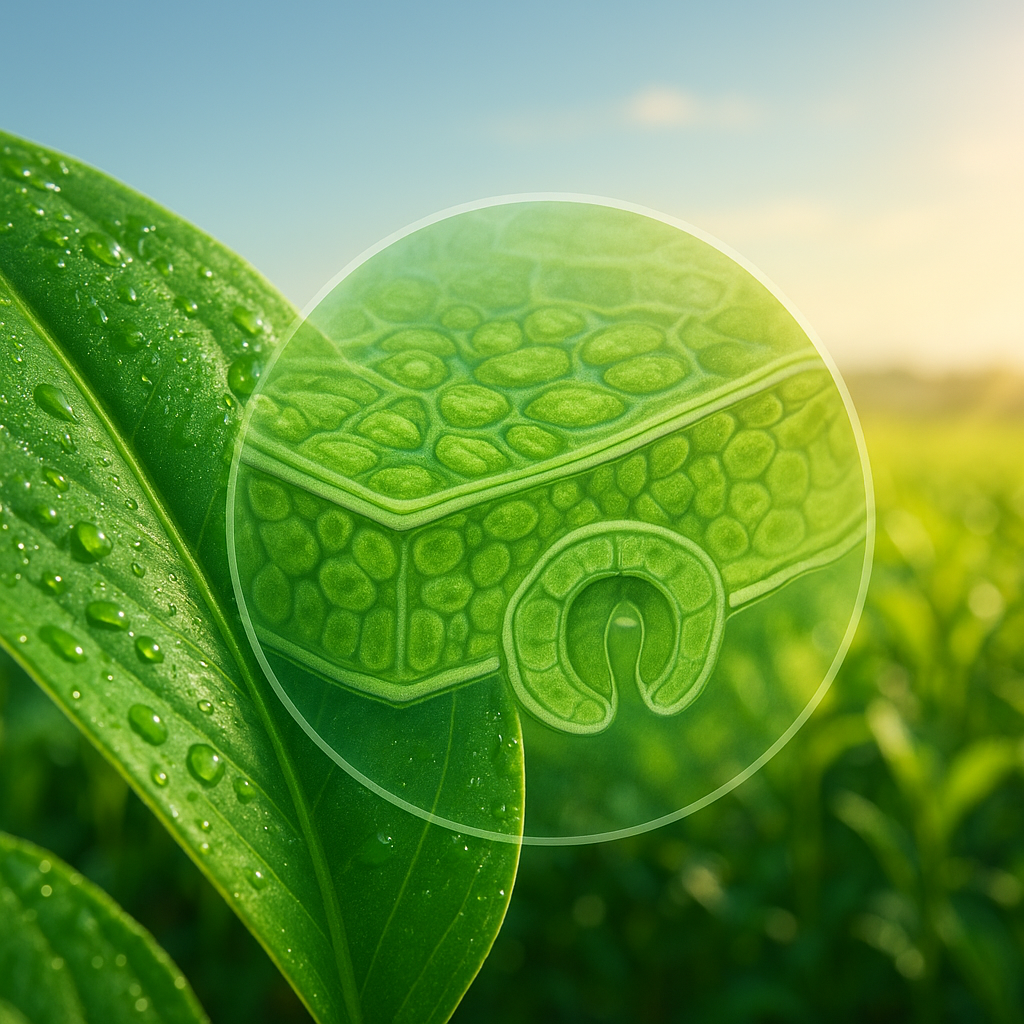
Photosynthesis is the fundamental process by which green plants, algae, and some bacteria convert light energy from the sun into chemical energy stored in glucose. This life-sustaining reaction uses carbon dioxide (CO₂) from the air and water (H₂O) from the soil, producing oxygen (O₂) as a byproduct. Occurring primarily in plant leaves, it forms the basis of most food chains and regulates Earth's oxygen levels.
The Basic Equation of Photosynthesis
The overall chemical equation for photosynthesis is 6CO₂ + 6H₂O + light energy → C₆H₁₂O₆ + 6O₂. This simplified formula shows how six molecules of carbon dioxide and six of water, powered by sunlight, yield one glucose molecule and six oxygen molecules. It highlights the transformation of inorganic substances into organic ones, essential for plant growth.
Inputs: Sunlight, CO₂, and H₂O
Outputs: Glucose (energy source) and O₂ (for respiration)
Site: Primarily in chloroplasts within leaf cells
Key Structures Involved: Chloroplasts and Chlorophyll
Photosynthesis occurs in chloroplasts, specialized organelles in plant cells filled with stacks of green discs called thylakoids (forming grana) and a surrounding fluid called stroma. The pigment chlorophyll in thylakoid membranes captures light energy, giving plants their green color by reflecting green wavelengths. Without chlorophyll, photosynthesis couldn't harness sunlight effectively.
Chlorophyll absorbs blue and red light most efficiently, exciting electrons to start the energy conversion. Other pigments like carotenoids assist by capturing additional wavelengths and protecting against excess light damage.
Step-by-Step: Light-Dependent Reactions
These reactions happen in thylakoid membranes and require light. Chlorophyll absorbs photons, boosting electrons to higher energy states. Water molecules split (photolysis), releasing oxygen and providing electrons to replace those lost by chlorophyll.
Light excites electrons in photosystems II and I.
Electrons travel through an electron transport chain, generating ATP (energy) and NADPH (reducing power).
O₂ is released as a waste product.
Light-Independent Reactions (Calvin Cycle)
Also called the dark reactions, these occur in the stroma and use ATP and NADPH from light reactions to fix CO₂ into glucose. The enzyme RuBisCO combines CO₂ with a five-carbon sugar (RuBP), forming unstable intermediates that rearrange into three-carbon sugars (G3P). Two G3P molecules form glucose.
Carbon fixation: CO₂ attaches to RuBP.
Reduction: ATP and NADPH convert intermediates to G3P.
Regeneration: Remaining G3P reforms RuBP.
Real-World Examples and Factors Affecting Photosynthesis
In sunflower leaves, photosynthesis peaks midday under intense light, producing sugars for seed growth. Underwater seagrasses perform it efficiently despite low light, adapting with more chlorophyll. Factors like light intensity, CO₂ levels, temperature, and water availability influence rates; extremes can limit it, as seen in drought-stressed crops.
C3 plants (e.g., wheat): Standard pathway, sensitive to heat.
C4 plants (e.g., maize): Efficient in hot climates, minimizing water loss.
CAM plants (e.g., cacti): Store CO₂ at night to reduce evaporation.
Why Photosynthesis Matters
Photosynthesis produces 90% of Earth's oxygen and all plant biomass, supporting herbivores, humans, and ecosystems. It inspired solar energy tech mimicking light capture. Understanding it aids agriculture, combating climate change by enhancing crop yields.