Moon as Celestial Body and Time Unit: Key Roles?
Explore the moon's dual significance as Earth's celestial satellite and the basis for the month time unit. From lunar phases to calendars in cultures worldwide, discover how ancient skywatching shaped timekeeping. Learn facts, history, and modern uses in this concise guide.
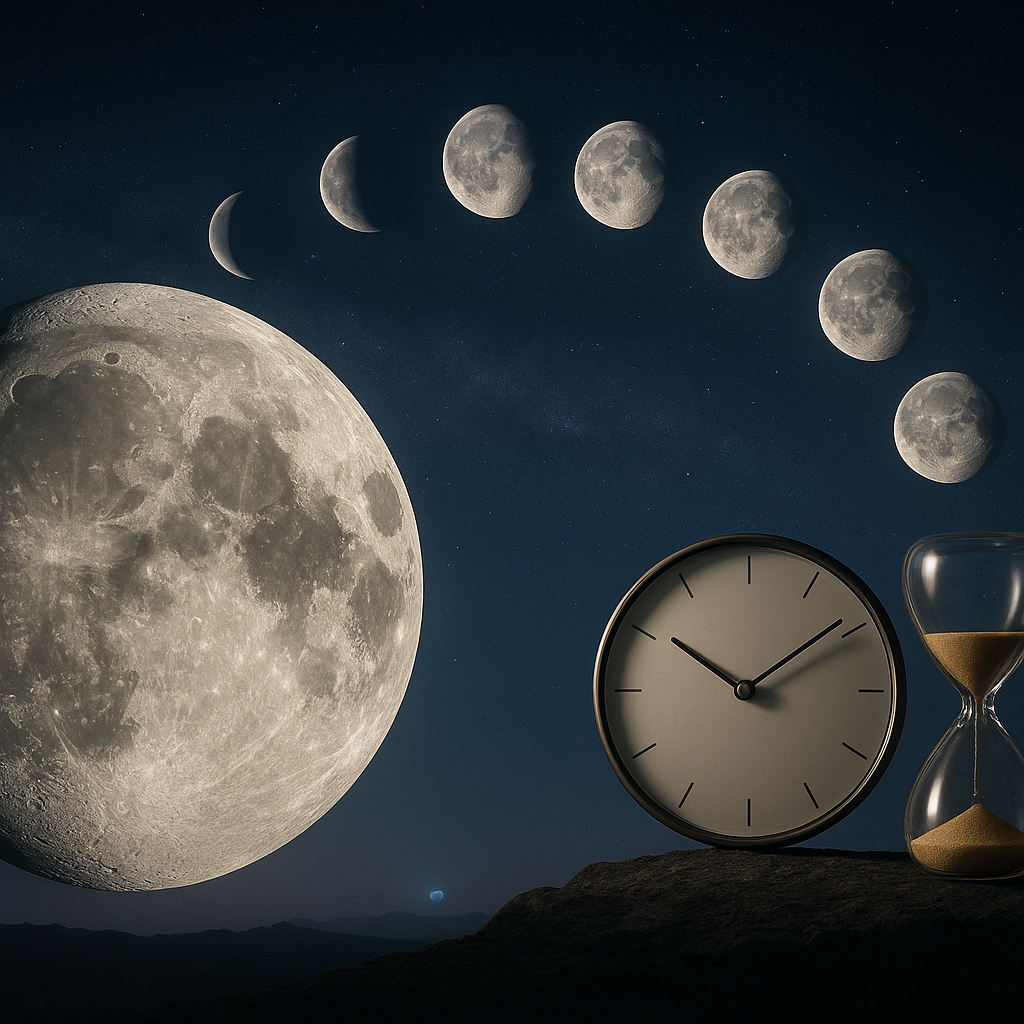
The moon, Earth's only natural satellite, captivates as a celestial body visible from everywhere on the planet. It also defines the month, a key time unit rooted in its 29.5-day cycle of phases. This connection, evident in many languages, reflects humanity's timeless link between astronomy and calendars.
The Moon as a Celestial Body
As a celestial body, the moon orbits Earth every 27.3 days, appearing to change shape due to its phases: new moon, crescent, quarter, gibbous, and full moon. With a diameter of 3,475 km, it is the fifth-largest moon in the solar system and causes tides through gravitational pull. Composed mainly of rock, its surface features craters, maria (dark basaltic plains), and highlands, formed by ancient impacts and volcanism.
Tidal Influence: The moon's gravity creates ocean tides, affecting marine life and coastal ecosystems worldwide.
Phases Cycle: Visible changes occur because we see varying portions illuminated by the sun.
Exploration: Human missions like Apollo 11 in 1969 landed on its surface, revealing lunar soil rich in anorthosite.
The Month as a Time Unit from Lunar Cycles
The month as a time unit directly stems from the lunar cycle, specifically the synodic month of about 29.53 days—the time between consecutive full moons. Ancient civilizations divided the year into 12 or 13 such periods to track seasons. Modern Gregorian months vary from 28 to 31 days, adjusted for solar alignment, but retain lunar heritage.
- Sidereal Month: 27.3 days, based on stars as reference.
- Synodic Month: 29.5 days, used in calendars for phase visibility.
- Anomalistic Month: 27.55 days, time for perigee (closest approach) to repeat.
Historical Development and Cultural Examples
Early societies like the Babylonians used lunar months for agriculture and rituals, leading to lunisolar calendars combining moon phases with solar years. The word for moon and month shares roots in Indo-European languages, symbolizing this bond. Today, purely lunar systems persist in religious contexts.
Islamic Calendar: Hijri year of 12 lunar months, used for Ramadan fasting.
Chinese Calendar: Lunisolar, with moon festivals like Mid-Autumn.
Hebrew Calendar: Balances lunar months with solar leap years for holidays like Passover.
Modern Scientific and Practical Insights
In astronomy, the moon aids space research, stabilizing Earth's axial tilt for stable climates. Timekeeping now favors solar precision, but lunar months influence apps tracking fertility cycles or tides. Future missions, like NASA's Artemis, will establish lunar bases, blending celestial exploration with time-honored cycles.
Conclusion
The moon bridges celestial body wonders and practical time units like the month, shaping human history from stone age tallies to digital clocks. Observing its phases offers a reminder of our cosmic roots—next full moon, consider charting your own lunar calendar for a fresh perspective.