What Is the Etymology of Merhaba?
Explore the fascinating etymology and origin of 'Merhaba,' the iconic Turkish greeting borrowed from Arabic. Discover its roots in ancient hospitality traditions, linguistic evolution, and cultural spread across the Middle East and beyond for a deeper understanding of everyday language.
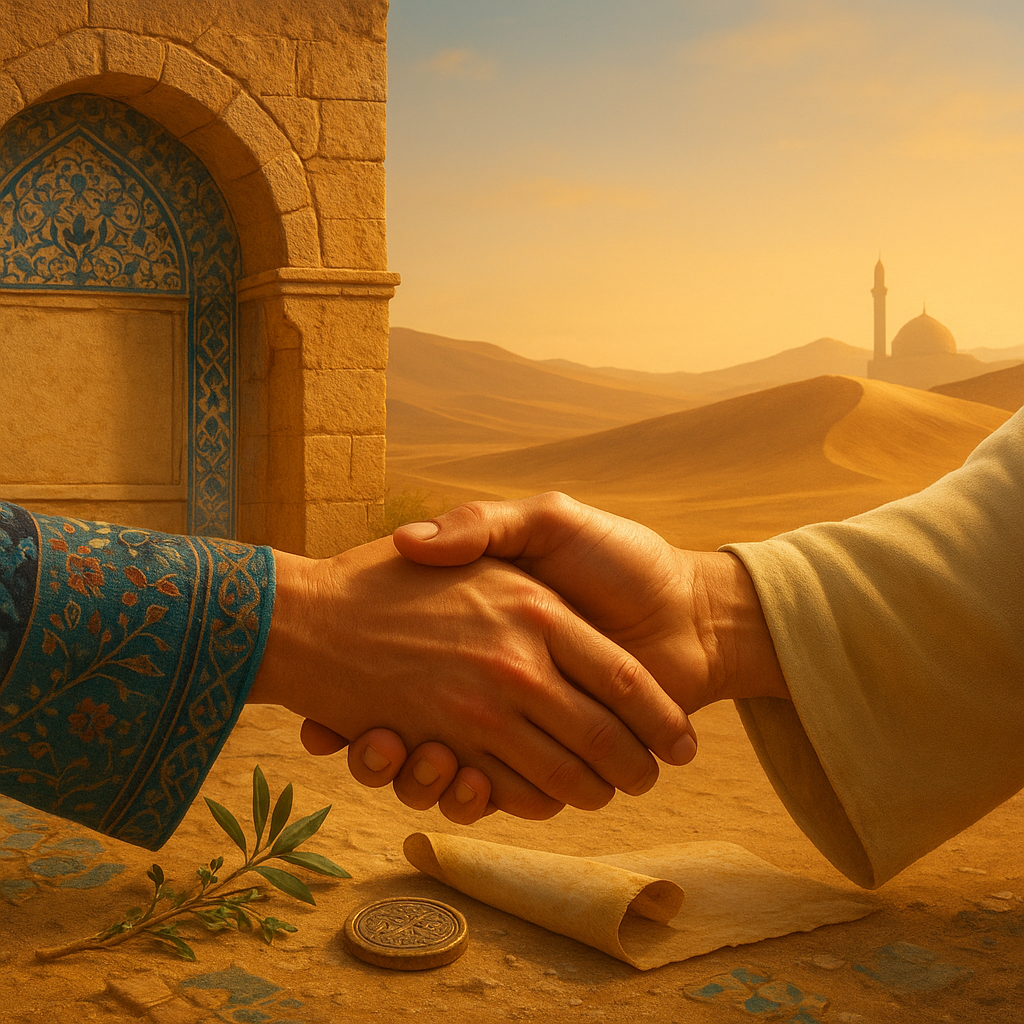
Merhaba, a ubiquitous greeting in Turkish meaning "hello" or "welcome," has deep roots in Arabic linguistic traditions. This word encapsulates centuries of cultural exchange across the Middle East, Balkans, and beyond. Its etymology reveals a story of hospitality, migration, and language borrowing that shapes modern interactions.
Arabic Roots of Merhaba
The word Merhaba originates from the Arabic marḥaban (مَرْحَبًا), an exclamatory form used to express welcome. It derives from the root r-ḥ-b (ر-ح-ب), which relates to concepts of spaciousness and openness, as in raḥaba meaning a wide, open area. In pre-Islamic Arabia, such greetings emphasized tribal hospitality, a core social value where guests were received with generosity in vast desert expanses.
Historically, marḥaban was the plural accusative form of marḥab, signifying "welcome" or "greetings." This evolved into a standard salutation during the Islamic Golden Age, spreading through trade routes and conquests. Linguists trace its earliest uses to 7th-century Arabic poetry and Quranic contexts indirectly linked to welcoming themes.
Bedouin traditions: Nomadic Arabs used it to signal safe passage and refuge.
Caravanserai culture: Travelers heard it at rest stops along the Silk Road.
Literary examples: Appears in works by poets like Al-Mutanabbi in the 10th century.
Adoption into Turkish Language
With the rise of the Ottoman Empire in the 14th century, Merhaba entered Turkish via Arabic influences through Islam and administration. Ottoman Turkish, heavily laced with Arabic and Persian loanwords, adapted it seamlessly as merhaba. This borrowing reflected the empire's multicultural fabric, blending Turkic roots with Islamic civility.
During the 19th-century Tanzimat reforms, language purification efforts under Atatürk's Turkish Language Association in the 1930s debated such words. Yet Merhaba endured, symbolizing continuity. Today, it's phoneticized in Turkish script, pronounced /mɛɾhaˈba/.
- Seljuk period (11th century): Initial contact via Persian intermediaries.
- Ottoman expansion: Widespread in courts and markets.
- Republican era: Retained despite purism, unlike some Arabic terms replaced by Turkic equivalents.
Linguistic Evolution and Variants
Merhaba has cognates across languages: Persian marhabā, Urdu marhaba, and Swahili marhaba via Indian Ocean trade. In Albanian and Bosnian, influenced by Ottoman rule, it's merhaba. Phonetic shifts include vowel harmony in Turkish, making it distinct from Arabic's guttural emphasis.
Marhaban bi-kum: Formal plural 'welcome to you all' in Arabic.
Ahlan wa sahlan: Complementary phrase meaning 'family and easy path,' often paired historically.
Selam: Turkic alternative, but Merhaba remains more welcoming.
Cultural and Modern Significance
Beyond linguistics, Merhaba embodies Eastern Mediterranean warmth. In Turkey, it's used casually or formally, from street markets in Istanbul to diplomatic events. Globalization has popularized it worldwide, appearing in films, music, and diaspora communities.
Examples include Turkish singer Tarkan’s songs and the 2010s EU-Turkey relations where leaders exchanged Merhabas. In refugee contexts, Syrian migrants spread it further in Europe.
Cinema: Featured in 'Merhaba Hayat' (Hello Life), a 2020 Turkish film.
Diplomacy: Used by Erdoğan in international summits.
Daily life: Greeting in Turkish tea houses (çayhane), fostering community.
Conclusion: A Timeless Welcome
The etymology of Merhaba bridges ancient Arabic hospitality with contemporary Turkish identity, illustrating language's role in cultural unity. Next time you say it, reflect on millennia of travelers' welcomes. For deeper study, consult resources like the Turkish Language Association or etymological dictionaries.